

Manufacturing has entered a completely new phase in 2026. Factories are no longer just places filled with machines and workers following fixed instructions. Today, smart factories think, learn, predict, and improve on their own. At the heart of this transformation is AI-driven automation—a powerful combination of artificial intelligence, data, and industrial automation technologies.
At Techy Hussain, we’ve seen how AI is changing the way factories operate, making them
faster, safer, and far more efficient than ever before.
What Is AI-Driven Automation?
AI-driven automation goes beyond traditional automation. Earlier systems followed
predefined logic—if X happens, do Y. But AI-based systems can analyse data, recognize
patterns, learn from past behaviour, and make real-time decisions without constant human
intervention.
In smart factories, AI works with:
● PLC and SCADA systems
● Industrial robots and cobots
● Sensors and IIoT devices
● Cloud and edge computing platforms
The result is an intelligent production environment that adapts automatically to changing
conditions.
Smarter Decision-Making in Real Time
One of the biggest changes AI has brought to smart factories in 2026 is real-time
decision-making. AI systems continuously collect data from machines, sensors, and
production lines. Instead of waiting for reports or manual checks, the system analyzes this
data instantly.
For example, if a machine starts showing early signs of failure, AI can:
● Detect abnormal patterns
● Predict when the failure might occur
● Automatically adjust production speed
● Alert maintenance teams before breakdowns happen
This level of intelligence drastically reduces downtime and production losses.
Predictive Maintenance Replacing Reactive Maintenance
In the past, factories relied on scheduled or reactive maintenance. Machines were either
fixed after breaking down or serviced based on fixed timelines—often wasting time and
money.
In 2026, AI-powered predictive maintenance has become a standard feature of smart
factories. AI algorithms analyze vibration, temperature, pressure, and usage data to predict
equipment health accurately.
At Techy Hussain, we’ve noticed that factories using predictive maintenance:
● Reduce unplanned downtime
● Extend machine lifespan
● Lower maintenance costs
● Improve overall production efficiency
Instead of guessing, factories now maintain machines exactly when needed.
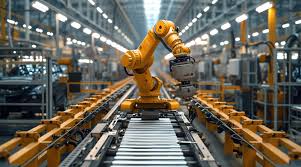
AI and Robotics: A Powerful Combination
Robots have been used in factories for decades, but AI has made them smarter and more
flexible. In 2026, AI-enabled robots and collaborative robots (cobots) work alongside
humans safely and efficiently.
These robots can:
● Learn tasks through vision and data
● Adapt to new product designs
● Adjust movements based on real-time conditions
● Improve accuracy over time
Cobots, in particular, are transforming assembly lines by handling repetitive or dangerous
tasks while humans focus on supervision and creativity.
Quality Control with AI Vision Systems
Quality control is another area where AI-driven automation is redefining smart factories.
Traditional inspection methods were slow and prone to human error. Today, AI vision
systems inspect products at high speed with extreme accuracy.
Using cameras and AI algorithms, smart factories can:
● Detect micro-defects invisible to the human eye
● Ensure consistent product quality
● Reduce waste and rework
● Maintain global quality standards
This has become especially valuable in industries like automotive, electronics, and
pharmaceuticals.
Energy Efficiency and Sustainability
Sustainability is no longer optional in 2026. AI-driven automation helps smart factories
reduce energy consumption and meet environmental goals.
AI systems monitor energy usage across machines and processes, then automatically
optimize operations to reduce waste. This includes:
● Smart energy scheduling
● Load balancing
● Identifying energy-inefficient equipment
At Techy Hussain, we believe green automation is not just good for the planet—it also
lowers operational costs and improves brand reputation.
Digital Twins and Simulation
Another major innovation redefining smart factories is the use of digital twins. A digital
twin is a virtual replica of a physical factory, machine, or process.
AI uses digital twins to:
● Simulate production changes
● Test new workflows without risk
● Predict outcomes before implementation
● Optimize plant layouts and processes
This allows factories to innovate faster while minimizing costly mistakes.
Workforce Transformation, Not Replacement
A common myth is that AI-driven automation replaces human jobs. In reality, smart
factories in 2026 are creating new roles rather than eliminating workers.
AI handles repetitive, dangerous, and data-heavy tasks, while humans focus on:
● System monitoring
● Decision-making
● Innovation and design
● Maintenance and optimization
Factories that invest in skill development see higher productivity and better employee
satisfaction.
The Future of Smart Factories
AI-driven automation is no longer a future concept—it is the present reality of smart
factories in 2026. Manufacturers who embrace AI gain a strong competitive advantage
through higher efficiency, better quality, and lower costs.
At Techy Hussain, we help industries adopt intelligent automation solutions that are
practical, scalable, and future-ready. Smart factories are not just about technology—they
are about building systems that think, adapt, and grow with your business.